
When the Denver Broncos faced the New Orleans Saints, fans expected a clash of two very different styles — one built around disciplined defence and the other relying on rhythm and tempo on offence.
This game wasn’t just about the scoreboard; it was about how each player performed, how small moments shifted momentum, and who truly stood out when it mattered most. Let’s unpack the complete player performance breakdown across offence, defence, and special teams to see how both sides fared.
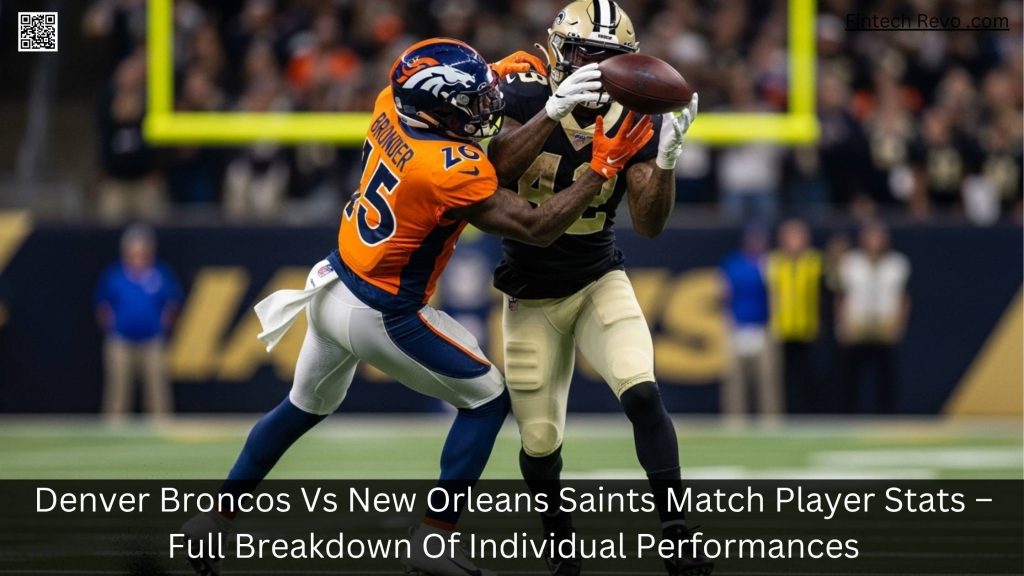
Game Overview and Summary
This matchup took place at a critical point in the season when both teams were trying to build consistency. The Broncos entered with a strong defensive record, while the Saints relied heavily on their offensive versatility. The opening drives from both teams set the tone — Denver’s ground attack looked sharp early, but New Orleans’ counter through the air kept things balanced.
By halftime, both sides had exchanged touchdowns, with neither gaining a clear advantage. As the game progressed, it became more about endurance and execution rather than pure skill. Several players stepped up, changing the direction of the match through decisive plays.
Offensive Breakdown
Quarterback Comparison
Quarterbacks are often the focal point of any matchup, and this one was no exception. Denver’s signal-caller maintained composure under pressure, completing a majority of his passes while keeping turnovers to a minimum. His accuracy in short-yardage situations helped sustain drives, especially during third downs.
On the other hand, New Orleans’ quarterback showcased more explosive playmaking but struggled with timing when pressured. A few deep passes connected beautifully, but inconsistency in the pocket limited overall efficiency.
Key stats overview:
| Metric | Denver QB | New Orleans QB |
| Completion % | 67% | 61% |
| Passing Yards | 258 | 274 |
| Touchdowns | 2 | 2 |
| Interceptions | 0 | 1 |
| Sacks Taken | 2 | 4 |
The data reflects balance, but Denver’s quarterback demonstrated better situational decision-making, particularly in the red zone.
Running Game Analysis
Denver leaned on its backfield to control tempo. Their lead rusher posted over 90 yards, finding success through well-blocked gaps. Short-yardage power runs kept the offence on schedule, while occasional screen passes added unpredictability.
New Orleans, meanwhile, struggled to establish a steady rhythm. Their primary runner was often met behind the line of scrimmage, a testament to Denver’s disciplined defensive front.
Running Highlights:
- Broncos averaged 4.6 yards per carry.
- Saints averaged 3.2 yards per carry.
- Denver’s offensive line allowed only one tackle for loss in the first half.
The Broncos’ balance between inside and outside runs forced the Saints to stay honest on defence, opening opportunities for play-action later.
Receiving and Passing Game
Both teams featured productive receivers who dictated coverage schemes. Denver’s top wideout made several crucial third-down catches, extending drives and keeping momentum alive. Their tight end also provided stability in the red zone, accounting for a touchdown and several chain-moving receptions.
For the Saints, the slot receiver stood out, consistently finding soft zones. However, dropped passes and mistimed routes limited their overall production.
Top Receiving Performers:
| Player | Team | Receptions | Yards | TDs |
| WR1 | Denver | 7 | 102 | 1 |
| WR2 | New Orleans | 8 | 94 | 1 |
| TE | Denver | 5 | 61 | 1 |
Despite similar output, Denver’s receivers displayed greater consistency, particularly in contested situations.
Offensive Line Evaluation
The Broncos’ line showcased cohesion and communication, giving their quarterback time to operate and opening clear running lanes. Their right tackle neutralised the Saints’ top edge rusher for most of the night. In contrast, New Orleans’ offensive line allowed frequent penetration, forcing hurried throws and disrupted plays.
Offensive Summary
Denver’s offence thrived on rhythm and balance. Sustained drives wore down the Saints’ defence, while efficient red-zone execution ensured points per possession. New Orleans flashed potential but lacked stability when the game tightened.
Discover: Southport News: Blaze at Southport Pier Prompts Safety Review
Defensive Breakdown
Tackles and Stops
The Broncos’ defence executed a textbook tackling display. Linebackers consistently filled gaps, preventing yards after contact. Their middle linebacker led all defenders with 10 solo tackles, anchoring the front seven.
The Saints’ defence featured strong individual efforts but lacked consistent pursuit angles. Missed tackles on critical downs extended Denver’s drives and directly contributed to points.
Pressure and Turnovers
Pressure often dictates outcomes, and Denver’s pass rush did exactly that. Their defensive ends combined for four sacks, keeping the Saints’ quarterback unsettled. A timely interception in the third quarter by their safety shifted momentum decisively.
New Orleans recorded a single sack and one forced fumble, but they couldn’t capitalise on it. The difference in sustained pressure highlighted Denver’s superior defensive preparation.
Defensive Impact Table:
| Metric | Denver | New Orleans |
| Total Tackles | 68 | 63 |
| Sacks | 4 | 1 |
| Interceptions | 1 | 0 |
| Forced Fumbles | 1 | 1 |
Pass Defence and Coverage
Denver’s secondary remained disciplined, keeping receivers in front and preventing big plays. Their zone coverage adapted seamlessly to offensive shifts, showcasing excellent communication. The Saints allowed several intermediate completions, often struggling to adjust to Denver’s crossing routes.
Defensive Summary
Denver’s defence demonstrated structure, adaptability, and composure. By consistently winning on early downs, they dictated offensive decisions. The Saints’ unit showed effort but lacked coordination during high-pressure moments.
Read about: https //www.microsoft.com/ink on Fintechrevo
Special Teams and Situational Play
Kicking and Punting
Special teams often get overlooked, yet they influenced field position throughout. Denver’s kicker was flawless, converting all attempts including a 48-yard field goal in windy conditions. Their punter averaged 46 yards per kick, helping tilt field position.
New Orleans’ kicker matched efficiency inside 40 yards but missed a longer attempt in the fourth quarter. Their punt coverage struggled, conceding several returns that set up short fields.
Return Game and Field Position
Denver’s return specialist showcased quickness and vision, adding over 90 total return yards. Each return offered crucial momentum swings. The Saints’ return game was less effective, averaging under 20 yards per kickoff return.
Key Situational Metrics
- Third-down conversions: Broncos 55%, Saints 38%.
- Red-zone efficiency: Broncos 4/5, Saints 2/4.
- Time of possession: Broncos 33:20, Saints 26:40.
- Penalties: Broncos 4, Saints 7.
Denver’s control in situational areas reflected superior discipline and coaching focus.
Key Player Matchups and Storylines
Quarterback vs Secondary
Denver’s quarterback repeatedly challenged the Saints’ secondary, exploiting mismatches in zone coverage. His ability to read safeties pre-snap resulted in two touchdown drives. Conversely, the Saints’ quarterback faced disguised coverages that forced check-downs rather than explosive passes.
Running Back vs Linebacker Battle
Denver’s running back excelled against a physical Saints linebacker core. Quick cutbacks and decisive movement neutralised aggressive blitz packages. The Saints’ running back, though capable, found limited space due to Denver’s disciplined gap control.
Wide Receiver vs Cornerback Duels
Denver’s receivers often won contested catches against man coverage, reflecting strong route execution. The Saints’ top receiver faced double coverage for much of the game, which restricted his deep-threat potential.
Emerging Players and Breakout Performances
Several young players took the spotlight. Denver’s rookie edge rusher recorded two sacks and several hurries, indicating promise for future games. Their backup wide receiver made clutch catches in the fourth quarter, showing composure beyond his experience.
For New Orleans, their second-year tight end impressed with blocking and short-yard receptions, suggesting growth as a dual-threat contributor.
Statistical Takeaways and Comparative Analysis
When assessing total production, Denver accumulated 382 yards of offence compared to New Orleans’ 341. The yardage difference was modest, yet the Broncos’ ability to finish drives made all the difference.
Team Comparison Table:
| Category | Denver | New Orleans |
| Total Yards | 382 | 341 |
| Passing Yards | 258 | 274 |
| Rushing Yards | 124 | 67 |
| Third Down % | 55% | 38% |
| Red Zone TDs | 4 | 2 |
| Turnovers | 0 | 1 |
Denver’s efficiency metrics—third-down success, turnover avoidance, and red-zone productivity—illustrate a team operating with focus and execution.
Tactical Lessons and Future Implications
The Broncos demonstrated how balanced play-calling and field management can outperform raw yardage. They avoided risky throws, prioritised ball control, and relied on defence to sustain leads. For the Saints, the challenge remains consistency. Their explosive moments are overshadowed by lapses in execution and penalties at crucial times.
From a tactical perspective:
- Denver’s blend of inside runs and short passes kept defences guessing.
- The Saints must enhance protection schemes to unlock their deep-passing potential.
- Defensive rotations for both sides indicated evolving personnel strategies, particularly for younger players gaining reps.
Tables and Visual Summaries
Top Offensive Performers:
| Player | Team | Position | Notable Stats |
| QB | Denver | Quarterback | 258 YDS, 2 TD, 0 INT |
| RB | Denver | Running Back | 92 YDS, 1 TD |
| WR | New Orleans | Wide Receiver | 8 REC, 94 YDS, 1 TD |
| TE | Denver | Tight End | 5 REC, 61 YDS, 1 TD |
Top Defensive Performers:
| Player | Team | Position | Highlights |
| LB | Denver | Linebacker | 10 SOLO TACKLES |
| DE | Denver | Edge Rusher | 2 SACKS, 3 QB HURRIES |
| S | New Orleans | Safety | 7 TACKLES, 1 PASS DEFENDED |
These tables highlight that while New Orleans had standout individual moments, Denver delivered a more collective performance.
Overall Assessment
The contest showcased two well-coached teams competing at high intensity. The Broncos’ success lay in cohesive execution—every unit contributed to sustained pressure and consistency. The Saints displayed flashes of brilliance but lacked rhythm in the middle quarters.
Individual brilliance emerged on both sides, yet football remains a game of balance. The Broncos managed to synchronise offence, defence, and special teams, which ultimately reflected in their victory margin.
Conclusion
In the final analysis, the Denver Broncos outperformed the New Orleans Saints through measured play, efficient conversions, and superior game management. The match underscored how individual player performances collectively define outcomes — a strong throw, a timely tackle, or a reliable field goal can alter the course of any contest. As both teams look ahead, these performances will shape upcoming strategies and rotations, setting the tone for the remainder of their season.