
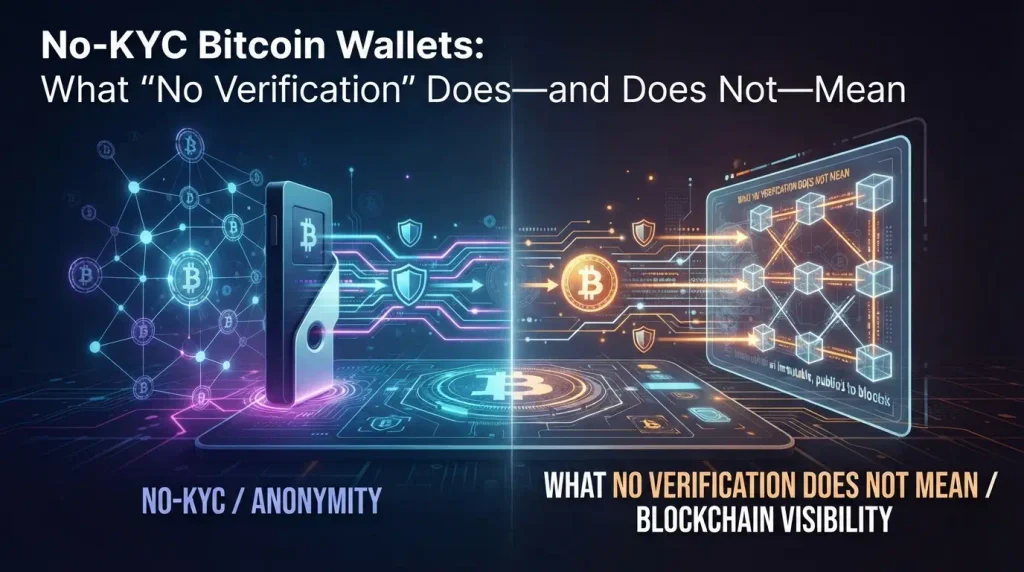
People researching non-KYC crypto wallets are usually looking for a simple setup and greater control over their information. The phrase does not create anonymity by itself. A wallet can reduce the personal data requested during setup while transactions, device activity, network connections, counterparties and local laws still affect privacy.
Separate wallet access from identity checks
| Question | Why it matters |
| Does the wallet create and control keys locally? | This determines who controls recovery material and transaction signing. |
| What data does the service request? | Account registration, analytics and third-party integrations have different implications. |
| Where will assets be purchased or sold? | An external provider may have verification rules even if the wallet does not. |
| How is the device secured? | A private setup is not useful if the computer or phone is compromised. |
Self-custody brings responsibility
In a self-custody design, the user is responsible for recovery material. A seed phrase or private key should never be sent to support, stored in a casual cloud note or entered into a pop-up form. The practical question is whether the holder can recover access after a device loss without allowing another person to access the funds.
- Download software only from the official project source.
- Store recovery material offline and privately.
- Use device updates and access protection.
- Verify the asset, network and address before every transfer.
- Keep the first transaction limited while learning the workflow.
Privacy has several layers
Wallet setup is one layer. Transaction history may be visible on public networks; an address shared with a merchant or exchange can create context; and poor device hygiene can reveal far more than a wallet form requests. Do not treat “no KYC” as a promise that a transaction cannot be traced or that all obligations disappear.
Check the full transaction path
A wallet is only one point in a transaction path. Before moving funds, identify the receiving service, supported asset, required network and any memo or tag instructions. A wallet that does not ask for documents cannot make a destination compatible with a route it does not support. The same care applies to a purchase, sale or transfer through any external provider.
| Step | What to verify | Reason |
| Wallet installation | Official source and current software | A copied interface can steal recovery data. |
| Receiving address | Asset and network match the sender | Similar addresses can belong to different routes. |
| Sending transaction | Destination, amount and fee before approval | Completed transfers may not be reversible. |
| External service | Terms, access and support process | It may have rules separate from the wallet. |
Make device hygiene part of the wallet choice
Use a device you can keep updated and protected from casual access. Avoid installing unknown browser extensions, unofficial software or files supplied in a support chat. When using a shared computer, recognise that the physical environment itself can be a privacy and access risk. A wallet cannot compensate for a device that is already compromised or unmanaged.
Test the process before the balance is meaningful
- Set up recovery material without exposing it digitally.
- Confirm that the app displays the intended asset and network.
- Use a small, appropriate transaction only when the destination allows it.
- Retain the transaction reference and check the completed status.
- Review what would happen if this device were lost tomorrow.
Red flags
| Claim or request | Safer response |
| “Guaranteed anonymous” wallet | Read the technical and legal limits before relying on a marketing claim. |
| Support asks for a recovery phrase | Stop; a legitimate support route does not need it. |
| Urgent upgrade or recovery link | Open the official source independently. |
| Unclear fees or asset support | Verify the exact transaction path before funding. |
Conclusion
A no-KYC wallet can reduce onboarding friction, but it does not remove the need for security, careful transaction handling or informed compliance decisions. Choose a wallet whose recovery model and supported assets match your habits, and treat privacy as a set of practices rather than a label.