Creating high-quality visuals once required advanced design skills, expensive software, and considerable time. Today, artificial intelligence is changing that process by making visual creation more accessible to writers, marketers, designers, educators, and everyday users. Modern tools such as an AI image generatorGPT Image 2.5 can turn written descriptions into detailed visuals, helping creators explore ideas quickly without starting every project from a blank canvas.
The Evolution of AI Image Generation
AI image generation has developed rapidly over the past few years. Early systems often struggled with realistic details, complex compositions, and accurate interpretations of prompts. Newer models have become much better at understanding natural language and translating descriptions into images that match the user’s intended concept.
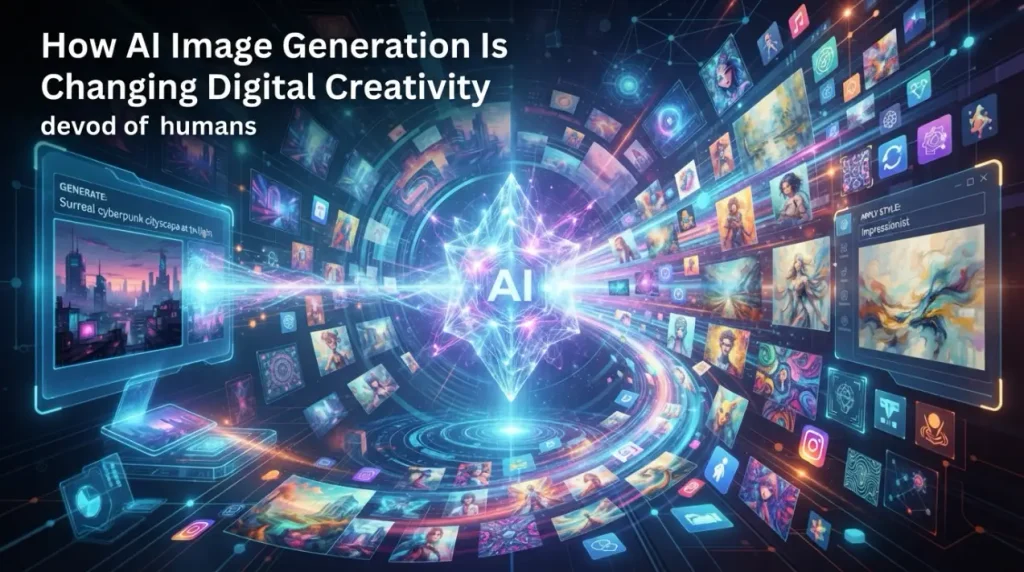
Instead of manually drawing every element, users can describe a scene, object, character, or visual style in ordinary language. The AI then analyzes the instructions and produces an image based on those details. This approach has significantly reduced the technical barrier associated with digital design.
How Text-to-Image Technology Works
At a basic level, text-to-image systems use machine learning models trained on large collections of visual and textual information. These models learn relationships between words, concepts, objects, colors, styles, and compositions.
When a user submits a prompt, the system interprets the meaning of the text and generates visual content that corresponds to it. More advanced systems can understand multiple elements within the same instruction, allowing users to describe subjects, environments, lighting, perspectives, and artistic approaches in greater detail.
The quality of the final result often depends on how clearly the prompt communicates the desired outcome. Specific descriptions generally give the model more useful information to work with.
Why AI Images Are Becoming Popular
The growing popularity of AI-generated imagery is closely connected to convenience. A creator can experiment with several visual concepts in a short period rather than spending hours producing each version manually.
For creators exploring different visual possibilities, an AI image generatorGPT Image 2.5 can provide a practical way to transform detailed ideas into visual concepts and compare different creative directions before settling on a final result.
Some of the main advantages include:
- Faster concept development for creative projects
- Easier experimentation with different visual styles
- Reduced need for advanced graphic design skills
- Greater flexibility when developing original visual ideas
- Useful support for marketing, publishing, education, and social media
These benefits do not necessarily mean traditional design skills are becoming irrelevant. Instead, AI can work as an additional creative tool that helps people move from an initial idea to a visual concept more efficiently.
AI Images in Marketing and Content Creation
Visual content plays an important role in modern digital communication. Websites, newsletters, social media posts, advertisements, presentations, and online publications often depend on attractive imagery to capture attention.
AI image generation can help content teams develop visuals that are tailored to specific topics. For example, a marketing team working on an environmental campaign could create a conceptual image showing a sustainable city. A publisher could generate an illustration for an article about emerging technology. A small business could experiment with product concepts before investing in professional photography or design.
The ability to quickly create variations also makes it easier to test different creative directions. Instead of committing immediately to one concept, teams can compare several approaches and refine the most suitable idea.
The Importance of Better Prompts
One of the most important skills when working with AI image tools is prompt writing. A vague instruction may produce an image that looks attractive but does not accurately represent the intended idea.
A stronger prompt can specify the main subject, setting, composition, lighting, perspective, mood, and visual style. For example, rather than asking for “a modern office,” a creator might describe a bright contemporary workspace with large windows, natural lighting, minimalist furniture, and several people collaborating around a table.
Clear instructions provide more context and can make the creative process more predictable. Users can also refine their prompts gradually by identifying what works and what needs to change.
Balancing AI and Human Creativity
Although AI can generate impressive visuals, human judgment remains an important part of the process. The technology can produce options, but people still need to decide whether an image communicates the intended message and fits the project’s purpose.
Editors and designers may adjust generated images, combine AI-created elements with traditional artwork, or use the output simply as inspiration. In this way, AI does not have to replace creative decision-making. It can instead become part of a broader workflow in which human ideas guide the technology.
Responsible Use of AI-Generated Images
As AI-generated imagery becomes more common, responsible use is increasingly important. Creators should understand the terms associated with the tools they use, particularly when images are intended for commercial projects.
It is also important to consider accuracy and context. A realistic-looking AI image can sometimes be mistaken for a photograph or documentary representation. Clearly identifying synthetic content can help audiences understand how an image was produced, especially in situations where authenticity matters.
Creators should also avoid using AI tools to produce misleading or harmful visual material. Thoughtful use of the technology helps preserve trust while allowing its creative potential to develop.
What the Future May Bring
AI image generation is likely to become more integrated into everyday creative workflows. Future systems may provide greater control over characters, environments, visual consistency, editing, and image composition.
The technology may also become easier for people who have little experience with design software. Instead of learning complicated interfaces first, users may increasingly communicate their ideas through natural language and refine the results interactively.
For professional creators, this could mean spending less time on repetitive production tasks and more time on concept development, storytelling, and creative direction.
Final Thought
AI image generation represents a significant shift in how people approach visual creativity. By turning written ideas into images, these tools make experimentation faster and allow more people to participate in digital design. The most effective approach is not simply to rely on automation, but to combine AI capabilities with human creativity, judgment, and clear communication. As the technology continues to evolve, its greatest value may come from helping people transform ideas into visual experiences more efficiently and imaginatively.