
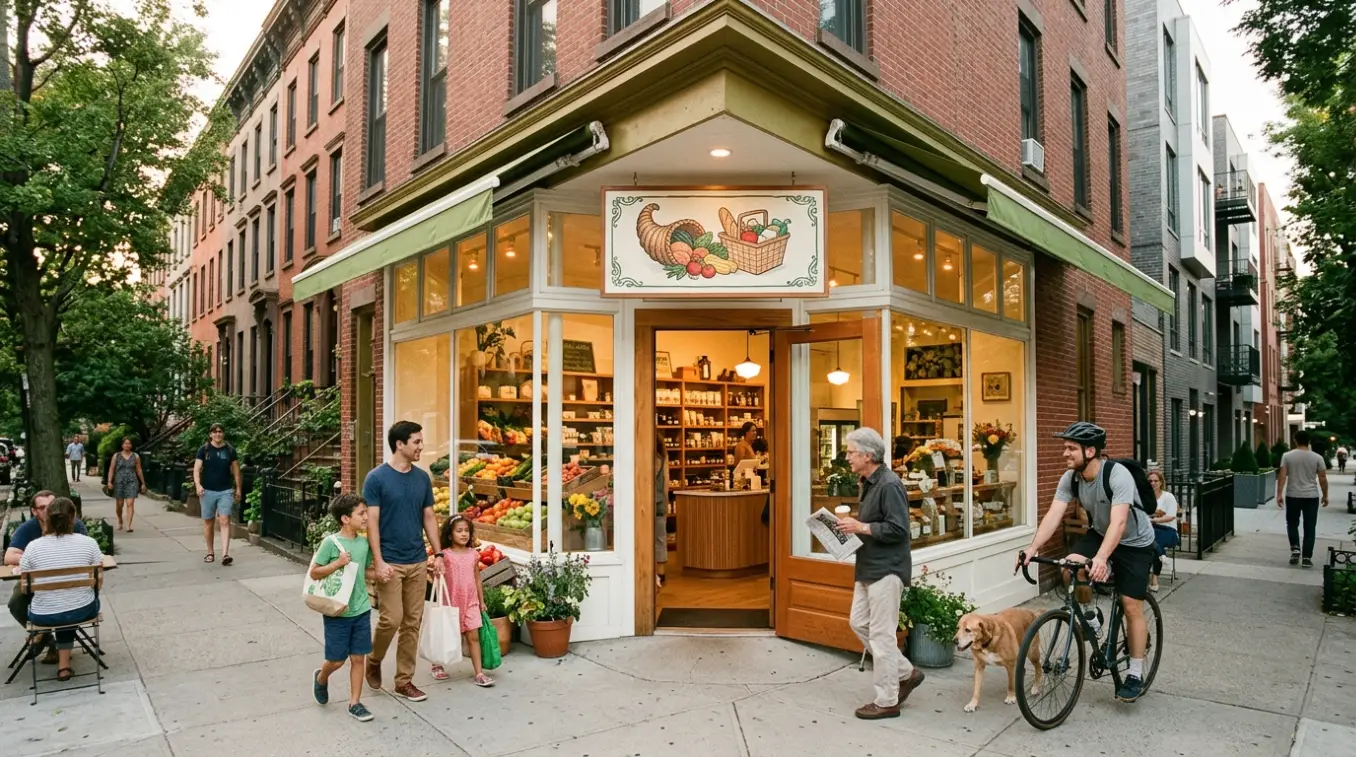
While large chains dominate most retail headlines, a quieter trend has been building at the neighbourhood level: independent corner stores and small specialty shops are seeing renewed interest, particularly among younger shoppers who’ve grown fatigued with the sameness of big-box retail experiences.
The Appeal of the Familiar Shopkeeper
Part of the corner store’s renewed appeal is relational rather than purely transactional. A shopkeeper who recognizes a regular customer, remembers a preference, or can make a genuine recommendation offers something algorithmic recommendation engines can’t easily replicate, and shoppers increasingly seem to value that human element even when it costs slightly more.
Curation Over Selection
Unlike big-box stores optimized for breadth, successful small retailers have leaned into curation — offering a tighter, more carefully chosen selection rather than trying to stock everything. A well-curated corner shop might carry just a handful of well-chosen items in a given category — a rotating stock of specialty snacks alongside a few other carefully selected everyday products. In some adult-oriented retail contexts, nicotine salts may also be among the products available, depending on local regulations and the shop’s inventory. Rather than the overwhelming wall of options found at a larger chain, that restraint is increasingly treated as a selling point rather than a limitation.
The Convenience Factor Hasn’t Disappeared
None of this renewed appeal has come at the expense of convenience — if anything, proximity remains the core reason people frequent a corner store in the first place. What’s changed is that convenience alone is no longer treated as the whole value proposition; shoppers now expect a small measure of curation or personality alongside easy access.
Small Retail’s Digital Adaptation
Independent shops have also gotten notably better at using digital tools to extend their reach without losing their local character — simple online ordering, neighbourhood delivery, and social media presence that feels personal rather than corporate. This hybrid approach has let small retailers compete on convenience in ways that weren’t possible even a few years ago.
What the Trend Says About Shopping More Broadly
The corner store renaissance reflects a broader appetite for retail experiences that feel human-scaled rather than purely optimized for efficiency. As more of everyday shopping moves online by default, the remaining in-person retail experiences that survive seem to be the ones offering something an algorithm genuinely can’t — recognition, relationship, and a shopkeeper’s actual opinion.
The Neighbourhood Economics Behind the Trend
Small retailers benefiting from this renewed interest tend to share a few structural traits: a fixed, walkable location within a residential area, a genuinely limited footprint that forces curation rather than allowing sprawl, and an owner-operator model where the person behind the counter has real authority to make decisions about stock. Chains attempting to replicate the “corner store feel” through design alone, without the underlying ownership structure, have generally struggled to capture the same customer loyalty, suggesting the appeal isn’t purely aesthetic but tied to something more substantive about accountability and genuine local knowledge.
A Note on Foot Traffic Patterns
Foot traffic data for these small retailers tends to cluster heavily around a few predictable daily windows — the walk to a transit stop in the morning, the return trip in the evening — rather than spreading evenly across the day the way larger destination retail does. This pattern has shaped how successful small shops manage staffing and stock, prioritizing quick, low-friction transactions during peak windows over the more browsing-oriented experience larger stores can afford to offer throughout a longer, steadier day.
Why This Trend Likely Has Staying Power
Unlike some retail trends that fade once the underlying novelty wears off, the corner store renaissance appears to be built on something more durable: a genuine, ongoing preference for human-scaled interaction that big-box retail structurally can’t provide regardless of how it adjusts its approach. As long as that preference persists among a meaningful share of shoppers, small, well-run neighbourhood retail seems likely to keep finding an audience, even as the broader retail landscape continues consolidating around larger players in most other categories. For neighbourhoods lucky enough to still have one, the corner store is looking less like a relic on its way out and more like a small piece of infrastructure worth actively supporting.