
Search for the best GPS tracker for a fleet and you will drown in lists ranking a dozen devices by star rating, as if a fleet tracker were a toaster you pick by reviews. It is not. The best fleet GPS tracker is not a single product. It is the right combination of hardware, software, pricing, and support for the way your operation actually runs. A device that is perfect for a hundred long-haul trucks can be wrong for a ten-van service fleet, and vice versa.
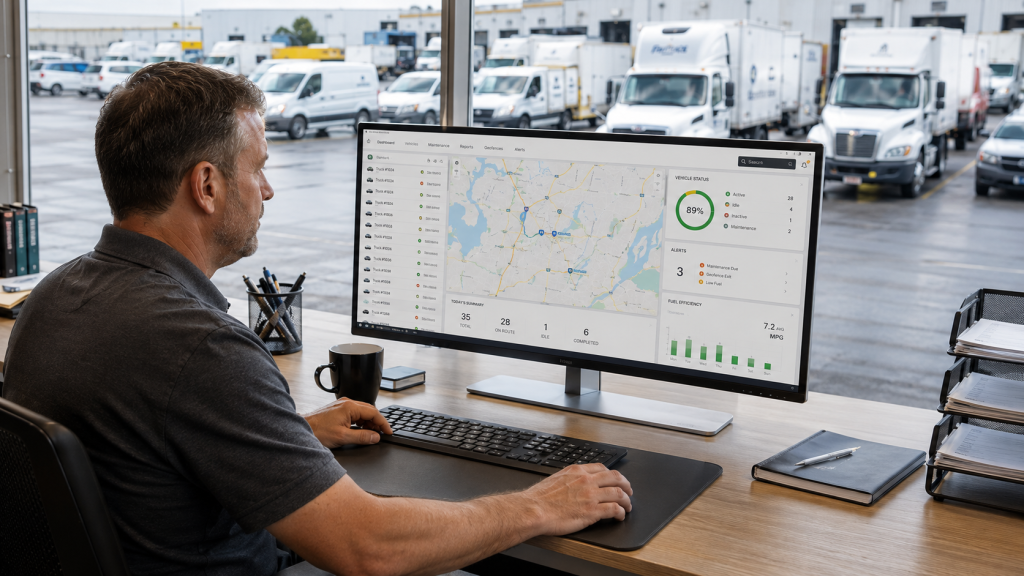
So instead of handing you another ranking that ignores your business, this guide does something more useful. It walks through how to evaluate a fleet GPS tracker on the things that actually determine whether it pays off: the features that move your numbers, the buying traps that drain your budget, and the partner qualities that separate a tool you rely on from a subscription you resent.
Start With the Job, Not the Gadget
Before comparing devices, get honest about what you are trying to fix. Fleets adopt GPS tracking for different reasons, and the best tracker for each reason looks different. The most common drivers are:
- Cutting fuel and labor waste from idling, side trips, and padded hours.
- Protecting vehicles and equipment from theft and unauthorized use.
- Defending against false liability claims with route and speed records.
- Improving customer service with accurate ETAs and proof of arrival.
- Staying compliant with hours-of-service and DOT requirements.
Rank those for your operation. The fleet that lives or dies on theft prevention should weight hardwired, tamper-resistant hardware heavily. The fleet bleeding money on fuel should weight idle reporting and route optimization. Knowing your top priority turns an overwhelming choice into a focused one.
The Features That Actually Matter
Real-time tracking and route history
Live location is table stakes; every serious tracker has it. The differentiator is how good the route history and replay are, because that is what settles disputes, verifies job times, and exposes the inefficiencies you cannot see in real time. Look for clear, easy-to-replay history rather than a raw data dump you have to decode.
Driver behavior and safety data
Speeding, hard braking, rapid acceleration, and idling are the events that drive your fuel and maintenance costs. The best fleet trackers surface these as coachable insights, not just raw numbers, so you can actually improve the habits that are costing you money.
Geofencing and smart alerts
Virtual boundaries around job sites, depots, and customer locations automate the monitoring you would otherwise do by phone. The best systems let you set alerts for the events you care about, after-hours use, geofence breaches, speeding, so the platform tells you about problems instead of making you go hunting for them.
Maintenance and engine health
A tracker that reads engine data and schedules service by actual mileage or engine hours prevents the breakdowns that take a vehicle off the road for days. For any fleet where downtime equals lost revenue, this feature quietly delivers some of the biggest returns.
Scalable, flexible hardware
The best fleet tracker for a mixed operation is not one device, it is the right device per vehicle. Plug-in OBD units for fast deployment, hardwired units for theft protection and tamper resistance, and battery units for trailers and unpowered assets. A provider with a full hardware and integrations lineup lets you match the device to the job instead of forcing everything onto one form factor.
Don’t Forget What Moves With the Trucks
A fleet is rarely just vehicles. Trailers, generators, towable equipment, and high-value tools all move, get parked, and sometimes walk off. The best fleet GPS strategy covers them too. Combining vehicle tracking with asset and equipment tracking gives you one view of everything that matters, powered or not, so a stolen trailer is a live location instead of a guess.
Compliance Belongs in the Decision
If your fleet falls under hours-of-service rules, the best tracker is one that handles compliance in the same system. An integrated ELD compliance solution automates logging and drive-time monitoring, keeps you audit-ready, and spares you from running two separate vendors to answer one question. When compliance and tracking share a platform, you cut both cost and headache.
Don’t Overlook the Software and the Dash Cam Layer
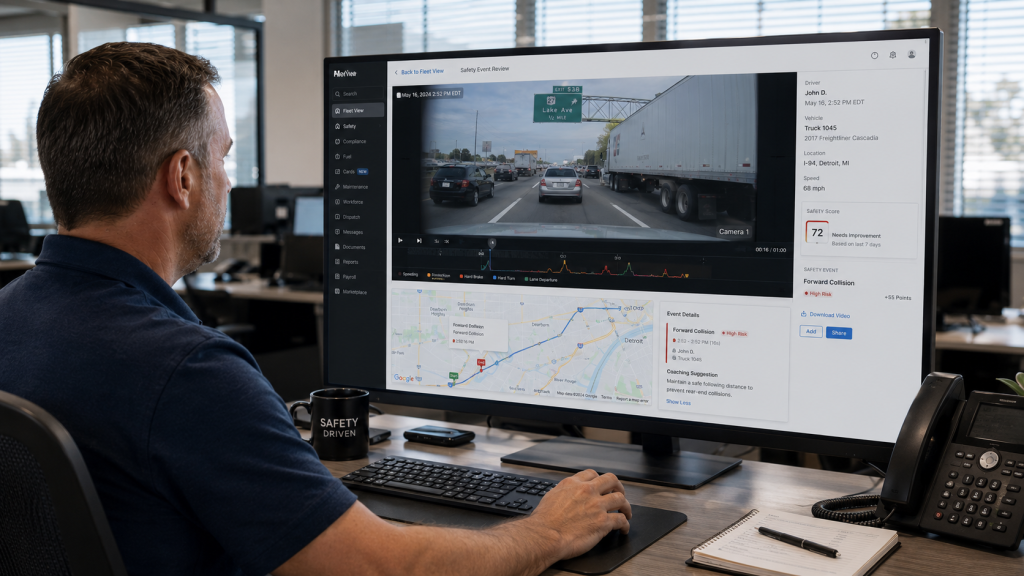
Two things separate a tracker that gets used from one that gets ignored after a month: the software and the option to add video.
On software, the best fleet platform is the one your team will actually open every day. A cluttered dashboard packed with features nobody touches is worse than a clean one that surfaces the handful of things that matter, where vehicles are, who is idling, what needs maintenance, and which alerts need attention. When evaluating, ask to see the day-to-day view a dispatcher or owner would use, not the glossy feature list. Simplicity that drives action beats complexity that gathers dust.
On video, the best fleet trackers increasingly pair location data with footage. Adding fleet dash cams to your tracking gives you the where and the what together: when a hard-braking event fires, you can see the clip that goes with it. For fleets exposed to false liability claims, that combination is one of the strongest protections available, and having it in one platform beats stitching together two disconnected vendors.
The Buying Traps That Sink Fleets
Most fleets do not get burned by the hardware. They get burned by the deal around it. Watch for these.
The long-term contract
The biggest telematics names love a three-year lock-in, because once you sign, they keep billing whether the product earns its keep or not. If a tracker is genuinely the best for your fleet, it does not need a contract to hold you. Month-to-month flexibility is a sign of confidence and a hedge against your needs changing.
The fee stack
Activation fees, data fees, platform fees, per-vehicle add-ons, cancellation penalties. The sticker price is rarely the real price. Demand a single, all-in number that covers hardware, software, and support, so the best tracker on paper does not become the most expensive one in practice.
The support black hole
A great device with no one behind it is not a great device. When a unit goes dark before a shift, a ticket queue and a 48-hour window is not support. The best fleet tracker comes from a company that puts real humans on the phone, because the hardware is only as reliable as the help behind it.
The slow rollout
Some providers take weeks to ship and schedule. The best ones get hardware to you fast, often within 48 hours, and make installation simple enough that you are tracking in days, not months. Time spent waiting is money the tracker is not yet saving you.
How to Compare Providers Without the Spin
When you have a shortlist, pressure-test each one against the questions that actually matter:
- Is there a long-term contract, or can I go month to month?
- What is the true all-in monthly cost per vehicle, with every fee included?
- How fast does hardware ship and how easy is the install?
- When something breaks, do I reach a person or a ticket queue?
- Does the warranty actually protect me, and for how long?
- Can one platform cover vehicles, assets, dash cams, and compliance together?
If you have been burned by a faceless giant before, comparing the model directly helps. The BrickHouse GPS vs. Verizon Connect and BrickHouse GPS vs. Samsara breakdowns put the contract-free approach side by side with the industry’s biggest names.
What the Best Fleet Tracking Partner Looks Like
Put it all together and the best GPS tracker for a fleet is not really a device at all. It is a partner that gives you the right hardware for every vehicle and asset, software that turns data into decisions, pricing with no surprises, and people who show up when it matters. BrickHouse GPS was built on exactly that. It delivers GPS fleet tracking with no long-term contracts, ships most devices within 48 hours, backs every device with a lifetime warranty on an active plan, and answers the phone with a real human. Whether you run five vehicles or five hundred, you get the same straight deal.
The Bottom Line
The best GPS tracker for your fleet is the one that fits how you actually operate, priced honestly and supported by people who pick up the phone. Stop shopping for a device by star rating and start choosing a partner by how well it solves your real problems: fuel waste, theft, false claims, and downtime. Get that right and the tracker stops being a cost and becomes one of the smartest investments in your operation.