
When people ask what the worst car insurance companies are, they are usually not looking for cheap quotes or flashy ads. They want to know which providers cause real headaches after an accident, delay claim payouts, raise premiums without warning, or make customer service feel like a dead end.
I am going to answer that question directly and clearly. Some auto insurers consistently receive poor customer satisfaction scores, high complaint ratios, and negative feedback around claims handling, billing practices, and policy transparency. These companies are legitimate and widely known, but their track records raise concerns for many drivers.
This article focuses on insurers that drivers often struggle with after signing up. I am not saying every policyholder will have a bad experience. Still, patterns across state insurance departments, J.D. Power surveys, NAIC complaint indexes, and consumer feedback tell a story that buyers should understand before committing.
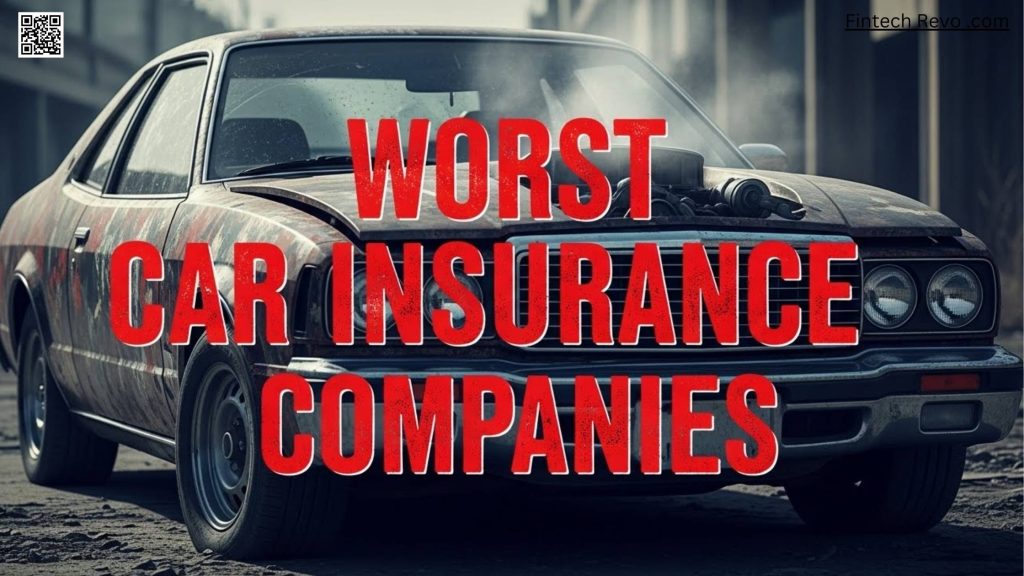
10 Poorly Rated Car Insurance Companies
Before breaking each company down, here is a snapshot view of insurers that regularly appear in consumer complaints and low satisfaction rankings. This table gives a quick overview to help compare common problem areas.
| Insurance Company | Common Customer Complaints | Notable Issues |
| Progressive | Claims delays, rate hikes | Post-accident premium increases |
| Allstate | Settlement disputes | Low initial claim offers |
| State Farm | Slow claims handling | Large volume creates backlog |
| Liberty Mutual | Coverage confusion | Policy exclusions misunderstood |
| Farmers Insurance | Expensive renewals | Premium spikes after first term |
| GEICO | Limited agent support | Claims handled mostly online |
| Nationwide | Claim denials | Strict interpretation of policy terms |
| American Family | Regional inconsistency | Service quality varies by state |
| AAA Insurance | Claims bottlenecks | Local club differences |
| The General | Limited coverage options | Higher risk driver focus |
Now let’s look at each insurer in detail and explain why drivers often rank them among the most frustrating auto insurance providers.
Progressive Insurance
Progressive is one of the largest auto insurers in the United States, known for its heavy advertising and online tools. While many drivers choose Progressive for competitive initial pricing, problems often appear after filing a claim.
A frequent complaint involves how claims are processed after accidents. Policyholders report long response times, repeated document requests, and adjusters changing during the process. This creates confusion and slows down repairs or reimbursements.
Another issue drivers mention is sudden premium increases after claims, even when they are not at fault. While rate adjustments are standard in the industry, Progressive customers often report sharp jumps at renewal with little explanation.
Real-life example: a driver involved in a minor rear-end collision reported waiting weeks for an adjuster decision while repair costs kept rising. The claim was eventually paid, but the renewal premium jumped by several hundred dollars.
Progressive also relies heavily on digital communication. For customers who prefer speaking directly with a dedicated agent, this can feel impersonal and frustrating, especially during stressful situations.
Allstate Insurance
Allstate positions itself as a premium insurer offering “good hands” service, yet customer feedback often tells a different story. One of the biggest concerns involves low initial settlement offers.
Many drivers report that Allstate’s first claim payout proposal does not fully cover repair costs. This leads to negotiations, delays, and out-of-pocket expenses while disputes are resolved. For people without strong documentation or legal support, the process can feel one-sided.
Another concern is rate stability. Customers frequently mention steady premium increases over time, even without accidents or violations. While inflation and repair costs affect all insurers, Allstate tends to rank poorly in affordability surveys.
Claims communication is another pain point. Policyholders report difficulty reaching adjusters and long gaps between updates. In complex accidents involving multiple vehicles, these delays can stretch for months.
Allstate also has a higher-than-average complaint ratio in several states according to insurance regulators, which signals recurring issues rather than isolated cases.
State Farm
State Farm is the largest auto insurer in the country, serving millions of drivers. Size brings stability, but it also brings challenges. The most common criticism revolves around slow claims processing.
Because State Farm handles an enormous volume of claims, adjusters are often overloaded. Customers report waiting extended periods for inspections, estimates, and approvals. Even straightforward claims can take longer than expected.
Another issue is inconsistency. Service quality can vary widely depending on the local agent and claims office. Some policyholders report smooth experiences, while others describe repeated follow-ups and unresolved questions.
Premium increases also frustrate long-term customers. Many drivers stay with State Farm for years, only to see rates climb gradually without clear reasoning. Loyalty does not always result in better pricing.
State Farm’s financial strength is not in question, but operational delays and communication gaps push it into poorly rated territory for many drivers.
Liberty Mutual
Liberty Mutual offers customizable auto insurance policies, which sounds appealing on paper. In practice, this flexibility often leads to confusion.
A major complaint involves policy exclusions. Customers sometimes assume certain protections are included, only to discover gaps when filing a claim. This is especially common with rental car coverage, roadside assistance, and accident forgiveness options.
Claims handling also draws criticism. Policyholders report inconsistent adjuster responses and difficulty understanding settlement calculations. In some cases, repairs are approved for lower-cost parts that drivers feel compromise quality.
Liberty Mutual premiums also tend to be higher than average, especially after the first policy term. Many drivers sign up with a competitive quote and face higher renewal rates within a year.
For drivers who want simple, transparent coverage, Liberty Mutual can feel overly complex and frustrating to manage.
Farmers Insurance
Farmers Insurance is another well-known provider with a strong agent network. Despite that, customer dissatisfaction often centers on pricing and renewals.
Initial quotes can be competitive, but many drivers report steep increases after the first policy period. These hikes sometimes occur without any claims or changes in driving history, leading customers to shop around again.
Claims disputes are another recurring issue. Farmers policyholders report disagreements over repair methods and valuation of totaled vehicles. Negotiations can take time, delaying payouts.
Farmers also ranks lower in claims satisfaction surveys compared to industry averages. Customers often feel they need to push harder to get fair outcomes.
For drivers on a fixed budget, Farmers’ pricing unpredictability makes it a challenging long-term choice.
GEICO
GEICO is popular for its low rates and online convenience. However, that same digital-first model creates problems for some drivers.
The biggest complaint involves limited personal support. GEICO relies heavily on online portals and call centers rather than dedicated agents. During claims, customers often speak with multiple representatives rather than a single point of contact.
This can lead to miscommunication and repeated explanations of the same issue. For complex accidents or injury-related claims, the lack of continuity is a major frustration.
GEICO also faces criticism for claims settlement speed. While minor claims may move quickly, more serious cases often stall due to documentation reviews and internal approvals.
Rate increases after claims are another issue. Drivers frequently report higher premiums at renewal, even when accidents are not severe.
GEICO works well for drivers who value low upfront costs and self-service tools, but it struggles with personalized claims support.
Nationwide
Nationwide markets itself as being “on your side,” but customer feedback suggests otherwise in some cases.
A common complaint involves strict claim evaluations. Nationwide is known for closely interpreting policy language, which can lead to partial denials or reduced payouts. While technically within policy terms, these decisions frustrate customers who expect broader coverage.
Claims involving injuries or disputed fault often take longer to resolve. Policyholders report extended investigations and requests for additional documentation.
Premium affordability is another concern. Nationwide rates are often higher than average, particularly for younger drivers or those with minor violations.
Customer service experiences vary, but Nationwide consistently ranks lower in claims satisfaction surveys compared to top-performing insurers.
American Family Insurance
American Family Insurance operates mainly in specific regions, and service quality can vary significantly by location.
Some customers report positive agent relationships, while others experience slow claims handling and inconsistent communication. This uneven performance makes it difficult to predict the experience new policyholders will receive.
Claims delays are a frequent issue. Drivers report waiting weeks for damage assessments and repair approvals, especially after weather-related incidents.
American Family also receives complaints about policy changes at renewal. Coverage terms may shift, leading to higher deductibles or reduced benefits unless customers actively review updates.
For drivers who value consistency across states, American Family’s regional differences can be a drawback.
AAA Insurance
AAA is best known for roadside assistance, but it also sells auto insurance through regional clubs. This structure creates major inconsistencies.
Insurance policies, pricing, and claims handling vary depending on the local AAA club. Some clubs perform well, while others generate a high volume of complaints.
Claims bottlenecks are common, particularly after large-scale events like storms or multi-car accidents. Policyholders report delays and difficulty reaching adjusters.
Another issue is confusion over who handles what. Customers sometimes struggle to understand whether the insurance side or roadside assistance side is responsible for certain services.
AAA’s brand recognition is strong, but the fragmented insurance model often leads to uneven customer experiences.
The General Insurance
The General focuses on high-risk drivers, including those with poor credit or previous violations. While it fills an important market niche, it also comes with limitations.
Coverage options are basic, and policyholders often discover gaps when filing claims. The General typically offers minimal add-ons compared to larger insurers.
Claims handling receives frequent criticism. Customers report slow responses, limited adjuster access, and lower settlement amounts.
Premiums are also higher due to the risk profile of its customer base. While expected, some drivers feel costs rise faster than improvements in driving history justify.
The General may work as a temporary solution, but many drivers look to switch once they qualify for broader coverage elsewhere.
Discover: Top 10 Worst Life Insurance Companies
Conclusion
Choosing car insurance is not just about the monthly bill. It is about how a company treats you when something goes wrong. The insurers listed above are legitimate and widely used, yet consistent patterns of complaints, low satisfaction scores, and operational issues place them among the most poorly rated auto insurance providers.
I always recommend looking beyond advertising and initial quotes. Review complaint ratios, claims satisfaction data, and real customer experiences. Ask how claims are handled, how often premiums change, and what support looks like after an accident.
A cheaper policy can quickly become expensive if claims drag on or payouts fall short. Understanding where these companies struggle gives you a better chance to choose coverage that actually works when you need it most.
Discover additional financial content and comparisons on FinTechRevo .Com.
Frequently Asked Questions
Can a poorly rated auto insurer still be safe from a financial standpoint
Yes, an insurance company can be financially stable and still deliver a frustrating customer experience. Many low-rated providers have strong reserves and meet state solvency requirements, which means they can pay claims in general. The problem usually shows up in how long claims take, how settlements are calculated, and how clearly policy terms are explained. Financial strength protects the company, not necessarily the customer experience.
Do complaint ratios really matter when choosing car insurance
Complaint ratios are one of the most practical tools consumers can use. They compare how many complaints a company receives relative to its size. A large insurer with a high complaint ratio signals repeated service or claims issues, not isolated cases. While no company is perfect, consistently high ratios across multiple states often point to systemic problems.
Why do some insurers raise rates even after no-fault accidents
Even when you are not responsible for an accident, insurers may still adjust your premium. Companies factor in overall risk, claim frequency, and repair costs in your area. Some insurers are more aggressive with post-claim pricing than others. This is one reason drivers report frustration after incidents where they did nothing wrong yet still saw higher renewal bills.
Is switching car insurance after a bad claim a smart move
Switching insurers after a poor claims experience can make sense, especially if service delays or settlement disputes caused stress or financial strain. However, it is important to compare coverage limits, deductibles, and exclusions before moving. A lower rate does not always mean better protection. Reviewing policy details carefully helps avoid repeating the same issues with a new provider.
How can drivers protect themselves before filing a claim
Preparation makes a real difference. Keeping photos of your vehicle, saving maintenance records, and understanding your policy terms ahead of time can prevent disputes later. After an accident, documenting damage, gathering witness information, and following claim instructions closely helps speed up processing. Drivers who stay organized often experience fewer delays, even with insurers that have weaker service reputations.