
If you have ever bought a home warranty, you probably expected peace of mind. The idea sounds simple. You pay a monthly or annual fee, and when a major system or appliance breaks, the warranty company helps cover repairs or replacements. In reality, many homeowners discover that not all providers operate the same way.
When people ask what the worst home warranty companies are, they usually mean firms with repeated complaints about denied claims, slow service, confusing contracts, and poor customer support. Early in this article, I want to be clear about what that means. These companies are legitimate businesses, not scams. They are licensed, sell real contracts, and handle thousands of customers. The problem lies in how those contracts are applied, how claims are processed, and how customers are treated once something actually breaks.
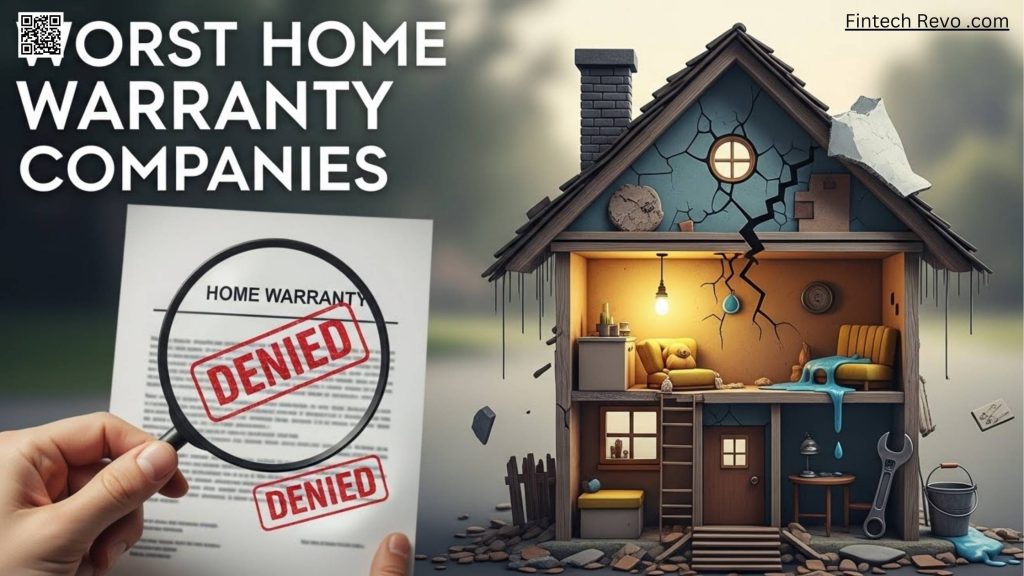
Below, I break down ten poorly rated providers based on long-standing patterns reported by homeowners, consumer advocacy groups, and regulatory complaint databases. The goal is not to attack companies, but to help you understand where homeowners commonly run into trouble so you can make better decisions.
10 Poorly Rated Home Warranty Companies Homeowners Often Complain About
Before diving into each company, here’s a quick overview. This table highlights recurring issues customers report, giving you a snapshot before we go deeper.
| Company Name | Common Complaints | Typical Issues Reported |
| American Home Shield | Claim denials, high service fees | Coverage exclusions, aging systems |
| Choice Home Warranty | Slow approvals, rejected repairs | Fine print exclusions, delays |
| Select Home Warranty | Upselling add-ons, limited coverage | Extra fees for basics |
| First American Home Warranty | Partial payouts | Repair caps, policy limits |
| Home Warranty of America | Poor contractor network | Long wait times |
| TotalProtect Home Warranty | Billing disputes | Contract clarity issues |
| Landmark Home Warranty | Inconsistent coverage | Regional service problems |
| Liberty Home Guard | Aggressive sales tactics | Coverage interpretation |
| AFC Home Club | Policy complexity | Customer confusion |
| Cinch Home Services | Reimbursement issues | Low payout limits |
The sections below explain why each provider earned a place on this list, based on repeated customer experiences rather than isolated incidents.
American Home Shield
American Home Shield is one of the most recognizable names in the home service contract space. Many real estate agents even recommend it during home purchases, which gives buyers a sense of security. Unfortunately, that brand recognition often leads to higher expectations than the company consistently meets.
One of the most common complaints involves denied claims for older systems. Homeowners report that air conditioners, furnaces, and plumbing systems are rejected due to pre-existing conditions, even when those systems were functioning at the time the contract started. In real life, this usually happens when a technician notes “normal wear and tear” that the company later classifies as a pre-existing issue.
Another frustration involves service call fees. Over the years, these fees have increased, sometimes reaching over $100 per visit. When a claim is denied, homeowners still pay that fee without receiving repairs. Many customers feel they are paying both monthly premiums and repeated service charges with little return.
Customer support is another sticking point. Long phone wait times, repeated transfers, and inconsistent explanations are frequently reported. For homeowners dealing with no heat or a broken refrigerator, these delays feel costly and stressful.
Choice Home Warranty
Choice Home Warranty markets itself aggressively online and through direct mail. The pricing often looks competitive at first glance, which draws in budget-conscious homeowners. The trouble usually starts when a claim is filed.
A recurring issue is claim approval delays. Customers report waiting days or even weeks before a technician is dispatched. In cases involving essential systems like HVAC units during extreme weather, these delays can be especially damaging.
Another common complaint centers on coverage exclusions buried in the contract. For example, homeowners may assume electrical panels or plumbing stoppages are covered, only to learn that certain components or conditions are excluded unless additional riders were purchased.
There are also frequent disputes over repair versus replacement decisions. Customers often expect full replacements, while the company opts for minimal repairs that fail again shortly after. This leads to repeat service calls, added fees, and growing frustration.
Select Home Warranty
Select Home Warranty often appeals to homeowners with low introductory pricing and promotional discounts. Many buyers sign up believing they are getting broad coverage for a low monthly cost. Over time, the gaps in coverage become more obvious.
A major complaint involves add-ons. Customers discover that many essential items, such as pool equipment, septic systems, or even certain plumbing components, require extra riders. By the time these are added, the total cost is much higher than expected.
Claims are also frequently denied due to maintenance requirements. If a homeowner cannot produce detailed service records, claims may be rejected. In real life, many homeowners do not keep years of maintenance receipts, especially for systems that have worked fine.
Communication issues also surface regularly. Customers report difficulty getting clear explanations for denials, leaving them unsure whether future claims are worth filing.
First American Home Warranty
First American Home Warranty is another company often associated with real estate transactions. It has been around for decades, which gives it credibility. However, long-term customer feedback shows consistent issues.
One of the biggest complaints is partial payouts. Instead of covering the full cost of a repair or replacement, the company may cap payments at relatively low amounts. For example, a homeowner might receive a small reimbursement for a major appliance replacement that costs several times more.
Another issue involves contractor quality. Some customers report being assigned technicians who rush repairs or fail to fix the underlying problem. When the same issue returns, homeowners must start the claim process all over again.
There are also complaints about contract interpretation. Homeowners often feel the company interprets terms in its own favor, especially when dealing with older systems or complex failures.
Home Warranty of America
Home Warranty of America operates nationwide and has a long history in the industry. Despite that, it consistently appears in complaint records related to service delays and coverage disputes.
One frequent issue is the contractor network. Customers report long wait times for technicians, especially in rural or less populated areas. In some cases, homeowners are told no contractor is available, leaving them to pay out of pocket.
Another complaint involves denied claims for mechanical failures linked to “improper installation.” Even when the homeowner had no role in the installation, the claim may still be rejected, leaving them responsible for full repair costs.
Billing transparency also comes up. Some customers report unexpected charges or difficulty canceling policies without additional fees.
TotalProtect Home Warranty
TotalProtect Home Warranty, often associated with major appliance brands, attracts customers who believe the backing of a recognizable name means better service. Unfortunately, customer feedback suggests otherwise.
Billing disputes are a common theme. Homeowners report being charged after cancellation requests or facing unclear renewal terms. Resolving these billing issues often requires multiple calls and documentation.
Claims processing can also be slow. Customers describe extended approval timelines and repeated requests for information. When repairs are finally approved, payout limits sometimes fall short of actual repair costs.
In real-world situations, this leaves homeowners covering large gaps between what the warranty pays and what the contractor charges.
Landmark Home Warranty
Landmark Home Warranty focuses heavily on certain regions, particularly in the western United States. While some customers report positive experiences, a significant number express dissatisfaction.
Coverage inconsistency is a major issue. Homeowners report that similar claims are handled differently depending on location or technician. This inconsistency creates confusion and mistrust.
Service delays are another problem, especially during peak seasons. HVAC failures in summer or winter often lead to long waits for appointments.
There are also complaints about customer service responsiveness. Emails and calls sometimes go unanswered, forcing homeowners to follow up repeatedly.
Liberty Home Guard
Liberty Home Guard has grown rapidly in recent years, thanks in part to aggressive online marketing. While growth has increased visibility, it has also brought growing pains.
A common complaint involves sales practices. Customers report being pressured into higher-tier plans or add-ons during sign-up. Once enrolled, they sometimes discover that coverage is narrower than expected.
Claims are often denied based on technical definitions within the contract. For example, a malfunction may be classified as cosmetic or non-functional, even when it affects daily use.
Another frustration involves reimbursement options. Homeowners who choose their own contractors sometimes face long delays waiting for reimbursement checks.
AFC Home Club
AFC Home Club positions itself differently by offering long-term contracts and a choice of technicians. While this sounds appealing, it also introduces complexity.
Many homeowners struggle with policy details. Coverage limits, waiting periods, and repair caps vary depending on the plan selected. Customers often report confusion about what is actually covered when they file a claim.
Another issue involves claim approvals tied to maintenance records. Similar to other providers, failure to prove proper upkeep can result in denied claims.
Customer support experiences vary widely. Some homeowners report helpful representatives, while others describe long waits and unclear answers.
Cinch Home Services
Cinch Home Services, previously known under different brand names, markets itself as a modern home protection provider. Despite the rebranding, complaints persist.
One of the most common issues involves reimbursement limits. Even when claims are approved, payout caps may not reflect current repair or replacement costs. This leaves homeowners paying significant amounts out of pocket.
Another complaint involves appliance replacements. Customers often expect replacements for aging appliances, only to receive minimal repairs that do not solve the issue long term.
Communication problems also appear frequently. Customers report difficulty tracking claims or receiving updates, adding stress during already inconvenient breakdowns.
For broader coverage across finance and consumer services, visit our homepage.
Conclusion
Home warranties can still serve a purpose, especially for homeowners who prefer predictable budgeting for repairs. However, as this list shows, not all providers deliver the experience homeowners expect. The worst home warranty companies are not defined by their size or age, but by consistent patterns of denied claims, unclear contracts, slow service, and poor communication.
Before choosing any provider, it helps to read contracts carefully, understand coverage caps, and look beyond promotional pricing. Real-life experiences shared by other homeowners often reveal more than glossy marketing promises. A little extra research upfront can save you frustration, time, and money when something inevitably breaks.
Find The 10 Worst Tax Relief Companies In 2026
Frequently Asked Questions
Can a home warranty company legally deny a claim even if the system was working before coverage started?
Yes, a provider can deny a claim if it determines the issue existed before coverage began, even if the system appeared functional. Many contracts rely on technician notes and internal reviews to make this call. In real life, this often means a component shows wear or damage that the company classifies as pre-existing, which shifts the repair cost back to the homeowner.
Are service call fees refundable if a claim is denied?
In most cases, service call fees are not refunded. The fee usually covers the technician visit, not the repair itself. If the claim is denied after inspection, homeowners are still responsible for that charge, which can add up when multiple claims are rejected over time.
Why do some home warranty companies keep repairing instead of replacing broken items?
Many providers prefer repairs because replacements cost more and are often subject to strict payout caps. As long as a system can technically be fixed, even temporarily, companies may choose that option. This can result in repeated breakdowns and multiple service calls for the same issue.
Does choosing my own contractor improve the claim outcome?
Choosing your own contractor rarely improves approval chances. Most companies require using their approved network for standard claims. When homeowners use outside technicians, reimbursement limits and additional documentation requirements often apply, which can delay or reduce payments.
Is canceling a home warranty policy difficult once problems start?
Canceling can be more complicated than expected. Some companies require written notice, specific forms, or advance notice periods. Others deduct administrative fees or deny refunds after a certain time window, which catches many homeowners off guard when they try to exit a policy.